


Creating Best In Class Services & Supports For A New Wave Of Aging
Attend the only all-day executive event designed to help health and human services organizations fill the growing gap in care to support healthy aging and longevity among older adults with complex needs. This summit will explore best practices for service delivery designed to support the complex needs of the aging population, strategies for sustainable funding, overcoming stigma, new technologies to improve outcomes, and more!
Summit Chairs:

Steve Hornberger, MSW
Subject Matter Expert,
OPEN MINDS

Michelle Matter
Subject Matter Expert,
OPEN MINDS
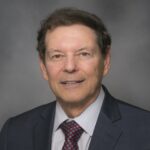
Stuart Buttlaire, Ph.D.
Vice President Of Clinical
Excellence & Leadership,
OPEN MINDS
Integrating Technology, Housing & Health To Support Independent Aging
Technology is playing an increasingly important role in supporting older adults to live independently while improving health outcomes and reducing social isolation. Affordable senior housing providers are beginning to integrate digital health tools, remote monitoring, and supportive technologies directly into residential settings to better connect residents with care and services.
This panel will explore emerging innovations at the intersection of housing, health, and technology, highlighting how housing providers, health care organizations, and technology partners are working together to improve resident health, reduce isolation, and strengthen service coordination. Panelists will also share insights from a national research study conducted by the Institute for Public Health Innovation and funded by the Humana Foundation that examines how these models are being implemented in affordable senior housing communities.
Stephen Samuels

Stephen Samuels is Vice President of Innovation & Impact Investing at the national office of Volunteers of America (VOA), one of the nation’s largest and most experienced nonprofit providers of housing, health, and human services. In this role, he leads market-driven growth and multi-sector partnerships to expand VOA’s housing and value-based health initiatives.
Stephen also directs VOA’s Futures Fund, an impact investing subsidiary, which has deployed more than $3 million in catalytic capital to advance innovation and entrepreneurship both within the organization and among early-stage founders across the country. Under his leadership, VOA tests and pilots emerging technology solutions that improve the quality of life for clients nationwide. Some of the most successful have been in the areas of financial security, agetech, workforce development and maternal health.
Most recently, Stephen oversaw the research and publication of Residents First: Technology for Connection and Healthy Living in Affordable Senior Housing—a study which provides a people-centered roadmap for effective technology and health integration in older adult resident communities.
Before joining VOA, Stephen served as Executive Director of Local Initiatives Support Corporation (LISC) in Greater Kansas City, one of the country’s leading community development financial institutions. He recently served on the national Advisory Research Council for Catalyzing Community Investment for Health Equity, a collaboration of the Build Healthy Places Network and the Association for Community Affiliated Plans; and is an Advisory Board member for CareAxis, a new service coordination platform for housing operators.
Stephen holds degrees in Urban Planning and Business Real Estate from the University of Cincinnati. Although his office is in Alexandria, VA, he works remotely from his home in Sacramento, CA.
Kari Evans
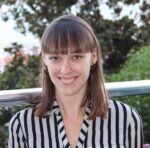
Kari Evans is a results-oriented monitoring, evaluation, and research expert with over 15 years of experience generating data-driven insights to enhance domestic and international community development programs. She specializes in approaches that center local voices and shared ownership, ensuring that evidence generation is grounded in community priorities and leads to meaningful, actionable change.
Kari is skilled in designing and implementing participatory monitoring and evaluation frameworks that combine qualitative and quantitative approaches to capture the depth of lived experience. She brings a human perspective to data and insights, using interviews, focus groups, participatory mapping, and other qualitative methods to center the stories behind the numbers. Her work emphasizes co-creation with stakeholders, integrating community knowledge with rigorous research design to enhance program effectiveness, equity, and sustainability.
Her technical expertise spans public health, governance and human rights, water and sanitation, and gender and social inclusion. She holds a master’s degree from The George Washington University’s Elliott School of International Affairs, where she focused on gender and development in the Middle East, and a bachelor’s degree with distinction in Foreign Affairs and a minor in Middle East Studies from the University of Virginia.
Charlotte Yeh, M.D., FACEP
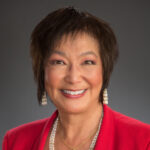
Dr. Yeh is a passionate advocate for healthcare transformation and healthy aging. Her career has spanned the industry: providers, payers, tech companies, nonprofits, and the government. Roles have included Chief Medical Officer, AARP Services Inc.; Regional Administrator, Centers for Medicare and Medicaid Services; and emergency department chief.
Dr. Yeh received an MD from Northwestern University Medical School. She has extensive board experience and has garnered many honors for her work.
Breaking The Silence: Addressing Mental Health & Social Isolation In Older Adults
Mental health conditions among older adults are often underdiagnosed and undertreated due to stigma, workforce shortages, and limited integration between behavioral health and aging services. At the same time, social isolation and loneliness are increasingly recognized as major contributors to depression, anxiety, and declining health among older adults.
This panel will examine strategies to reduce stigma and expand access to behavioral health care while addressing social isolation as a key driver of mental health challenges. Panelists will discuss approaches such as integrating behavioral health into primary care, expanding geriatric mental health training, strengthening partnerships between health care providers and community organizations, and incorporating social connection interventions such as peer support and community engagement programs.
Scott Kaiser, M.D.
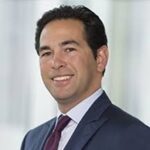
Scott A. Kaiser, MD, is the CEO of Determined Health, a company he co-founded with a vision for a new approach to community care—one that starts with human connection, first. Kaiser is a board-certified family physician and geriatrician with executive leadership experience focused on the improvement of aging services, geriatric care, and population health. Engaged in clinical care, teaching, community outreach, advocacy, and research, Kaiser is the Director of Geriatric Cognitive Health at the Pacific Neuroscience Institute, an adjunct faculty member of the USC Leonard Davis School of Gerontology, and serves on the boards of several non-profit organizations. He is determined to solve healthcare’s greatest challenges and create healthy communities that support us all in living well and aging well.
Kaiser completed his undergraduate studies at Vassar College with a degree in Science, Technology, and Society, and received his medical degree from the Keck School of Medicine of USC. He went on to train within the Lawrence Family Medicine Residency, the Harvard Geriatric Medicine Fellowship, and the UCLA Health Services Research Fellowship.
Kristen Brooks, M.D.
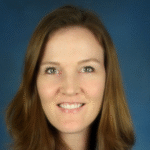
Dr. Kristen Brooks completed medical school and residency training before continuing at the University of California, San Francisco (UCSF) as an Assistant Clinical Professor in the Department of Psychiatry, where she served as Assistant Director of the Psychiatry Consult Service.
In 2012, she joined Kaiser Permanente’s Department of Psychiatry as an adult outpatient and Consultation-Liaison (CL) Psychiatrist. She continues her clinical work in CL Psychiatry today and co-leads KP Northern California’s Regional Consultation-Liaison Psychiatry group. In her clinical work she sees medically hospitalized patients needing expert consultation from a Psychiatrist in addition to providing consultation to a wide variety of specialists across the medical center. She co-led the development and regional spread of KPs Delirium Management and Prevention Program across all KP Northern California hospitals and served a clinical co-lead for this work for nearly a decade. She has published and presented nationally on delirium care and served on the Conference Planning Committee for the American Delirium Society.
Dr. Brooks currently serves as Associate Physician in Chief (APIC) for Risk Management and Patient Safety, Mental Health, Skilled Nursing, and Outpatient Quality at KP San Rafael, where she also co-leads the Ethics Committee and serves as Assistant Chief for Medical-Legal Affairs. She also serves as Chair of the APIC’s of Risk Management and Patient Safety across Northern California.
State & Local Strategies For The Next Decade: Building Age-Ready Systems of Care
States and communities across the country are responding to rapid demographic change as the population of older adults grows and becomes more diverse. Workforce shortages, rising care needs, and evolving expectations around access, technology, and care coordination are placing new demands on aging and health systems. Many states are developing Multisector Plans for Aging (MPAs) to align policy, coordinate services, and strengthen systems that support aging across health care, housing, transportation, and community services. At the same time, cities and counties are advancing Age-Friendly Community Action Plans to translate these broader policy goals into practical strategies that improve daily life for older adults.
This panel will explore how state and local leaders are working together to build age-ready systems through cross-sector collaboration, expansion of home- and community-based services, workforce development, and community planning. Panelists will discuss how statewide policy initiatives and local age-friendly strategies can reinforce one another to create coordinated systems that support healthy aging over the coming decade.
Sarah Steenhausen
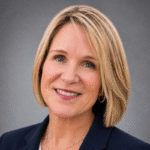
Sarah Steenhausen serves as Deputy Director of the Division of Policy, Research and Engagement at the California Department of Aging. In this role, she collaborates with state departments and stakeholders in developing policy and research impacting older adults, people with disabilities and family caregivers to advance system change and realize the goals of California’s Master Plan for Aging. Previously, Sarah served as Director of Policy and Advocacy at The SCAN Foundation. She began her policy career in 2001 as a Consultant to the California State Senate Subcommittee on Aging and Long-Term Care.
Sarah holds a Master of Science in Gerontology from the University of Southern California, Davis School of Gerontology and a Bachelor of Arts in History from Connecticut College in New London, Connecticut.
Amy Ramirez, MSW

Amy Ramirez is Executive Director of Healthcare Foundation Northern Sonoma County, where she is reshaping regional philanthropy to shift power, align capital, and build community-rooted health infrastructure. A former medical social worker, she leads cross-sector efforts that integrate public financing, workforce development, and community leadership to advance long-term health equity. Her work focuses on designing scalable models that strengthen safety-net systems and center lived expertise in funding strategy.
Aging In Place: Care Models That Are Improving Outcomes
As health care financing shifts toward value-based reimbursement, aging services providers are increasingly expected to demonstrate measurable outcomes while supporting older adults to remain safely at home. This panel will highlight scalable models that align Medicare Advantage plans, provider organizations, hospitals, and community-based services to improve outcomes while controlling costs.
Panelists will share lessons from home-based care coordination programs, hospital-to-home transition models, and provider–payer partnerships that are helping reduce avoidable hospitalizations and improve continuity of care for medically complex older adults.

Jessica Santos, MS, BSN, RN, CWOCN

Jessica Santos, MS, BSN, RN, CWOCN, brings two decades of clinical, operational, and educational leadership experience across home-based care, hospital care, nursing education, workforce development, and quality improvement.
Ms. Santos currently serves as the Director of Patient Care Services for National Home Health Services, a home health organization providing care to more than 2,000 patients each day across Northern California. In this role, Ms. Santos provides clinical and operational oversight across multiple programs and service lines, with responsibility for patient safety, regulatory compliance, clinical quality, and workforce competency. Her responsibilities also include oversight of a hospital-substitution program providing acute, hospital-level services to patients in their homes.
Ms. Santos also has experience in higher education and nursing professional development. She has served in university faculty roles teaching graduate-level psychopharmacology, advanced pathophysiology, and advanced pharmacology. In addition, she has developed clinical curricula and nurse residency programs for health care organizations across the United States, supporting the education and transition-to-practice of nurses in emergency, critical care, medical-surgical, and behavioral health specialties.
Earlier in her career, Ms. Santos held clinical, education, and leadership roles in acute and behavioral health settings. Her experience includes psychiatric and medical-surgical nursing, emergency and intake services, specialty behavioral health programming, clinical instruction, and staff education.
Ms. Santos’ academic preparation spans the biological sciences, nursing, and behavioral health, including graduate education in biomedicine and psychiatric-mental health and undergraduate education in nursing and biochemistry. She earned her nursing degree from Johns Hopkins University and her Master of Science in Biomedicine from Barry University. She is also a Certified Wound, Ostomy, and Continence Nurse.
Kasey Cheal
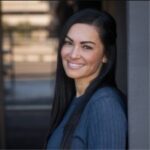
Kasey Cheal, is the Founder and CEO of Exhava, a boutique concierge home care agency in San Diego specializing in dementia, memory care and autism. With more than 20 years in home care and 13 years leading her own agency, she has hired and trained over 100 caregivers serving medically complex older adults at home, and holds referral partnerships across Sharp, Scripps, and UC San Diego Health. Exhava is a participating partner in Medicare’s GUIDE dementia care model. A Certified Dementia Practitioner and CADDCT-certified trainer, Kasey serves on the City of San Diego’s Senior Affairs Advisory Board, on The Arc of San Diego’s East County Advisory Board, and as Director of Advocacy for NAWBO San Diego.
Paula Digerness, MLTCA, NHA

Paula Digerness is an experienced healthcare executive with more than 25 years of leadership in senior living, long-term care, and healthcare operations. She currently serves as Executive Director and Nursing Home Administrator at Carlsbad by the Sea, a continuing care retirement community recognized for its 5-star Medicare rating and top-quartile satisfaction results. Paula has led multiple communities through record operational performance, innovative dementia care program design, and flawless regulatory surveys. She holds a Master’s in Long-Term Care Administration from the University of Southern California and is pursuing her Doctorate in Social Work. Known for her strategic vision, operational excellence, and commitment to staff development, Paula brings deep expertise in addressing today’s staffing and workforce challenges in healthcare.